



clad pipe manufacturers
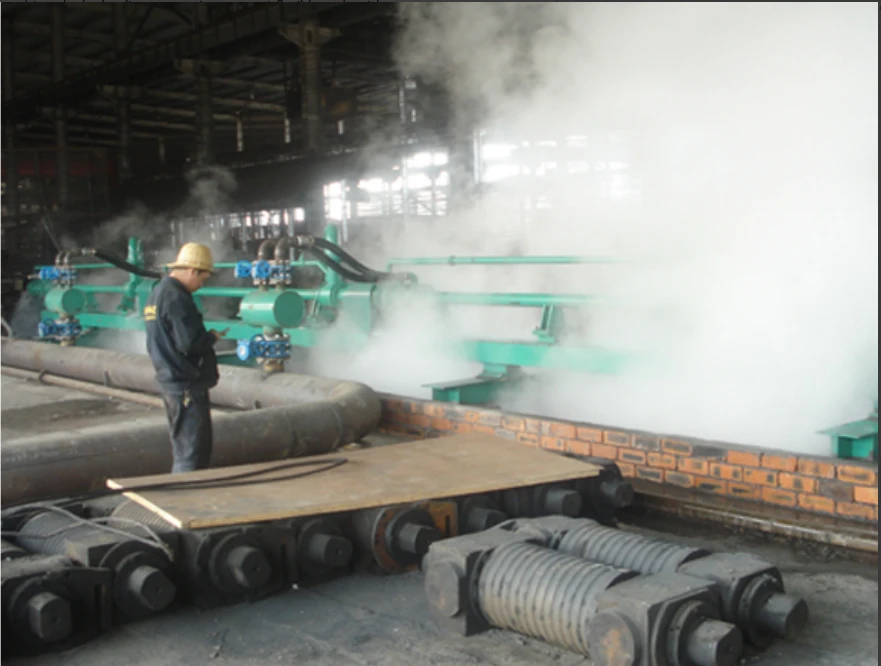
Industry Focus Metal cladding through roll bonding cladding technology is transforming sectors like petrochemicals, metallurgy, water supply, and offshore engineering. As demands for high-strength, corrosion-resistant, and cost-effective materials grow, composite solutions integrating advanced hot roll bonding cladding and clad pipe welding are witnessing accelerated adoption. According to Grand View Research , the global clad pipes market size was valued at USD 2.9 billion in 2022 and is projected at 6.1% CAGR until 2030. What is Roll Bonding Cladding ? Roll bonding cladding is an advanced metallurgical process that permanently bonds two or more dissimilar metals into a composite plate or pipe via high-temperature, high-pressure rolling. This creates a material combining the superior corrosion resistance of the clad layer (such as stainless steel, titanium, or nickel alloys) with the mechanical strength and economy of a carbon or alloy steel substrate. Technical Parameters & Industry Standard Reference Leading international standards for roll bonded clad products include ASTM B898 , EN 13445-2 , ISO 9001 Quality Management, and ANSI/ASME codes. The below table compares key technical metrics of roll bonding cladding , hot roll bonding cladding , and clad pipe welding : Parameter Roll Bonding Cladding Hot Roll Bonding Cladding Clad Pipe Welding Typical Clad Layer Thickness 2-50 mm 2-20 mm 3-10 mm Bond Strength >210 MPa (ISO 15614-7) >120 MPa Up to 160 MPa Clad/Substrate Material Options 304/316L SS, Ni, Ti, Zr, Cu, Duplex, C22 Stainless, Ni alloys Stainless/Carbon, Nickel/Carbon Production Efficiency High (large plates, seamless tubes) Moderate Medium - depends on weld Long-term Corrosion Resistance Excellent (as per ASTM B898) Good Average (HAZ zones possible) Typical Applications Pressure vessels, pipelines, heat exchangers Pressure vessels, tanks Pipes for Oil & Gas, water, chemical Manufacturing Certification ISO 9001, PED, ASME, DNV-GL ISO 9001, ASME ISO 15614-7 *All figures sourced from metallurgical research archives and product data sheets: ISO, ASME, and ASTM standards. Industry Trends & Market Demand (2024-2030) - Robust downstream demand from petrochemical, LNG, desalination, and renewables sectors (annual growth rate for clad pipes in oil & gas: 7.2% as per IMARC ). - Increasing adoption of roll bonding cladding in critical installations due to stricter anti-corrosion and safety regulations. - Ongoing R&D investments are fostering superior alloys (e.g., Ni-Cr-Mo, super-duplex). - High integration of CNC automation for better dimensional accuracy and repeatability. Complete Roll Bonding Cladding Manufacturing Process Raw Material Preparation Substrate & clad plates (e.g., Q345R + 316L SS) → Surface Treatment Grinding, degreasing, pickling per ISO 8501 → Stacking & Welding Edge weld or tack weld to ensure positioning → Vacuum Sealing Eliminate oxidation; maintains clean interface → Heating Heat to 950-1170°C (monitored per EN 10204) → Rolling (Hot/Cold) Cladding Rolling Mill - progressive reduction → Cooling & Post-Process Air/water quench; ultrasonic testing, flattening Visualization: Watch Roll Bonding Cladding Process Animation » Product Spotlight: Cladding Rolling Mill The Cladding Rolling Mill from Beijing YW Industrial is engineered explicitly for large-scale roll bonding cladding plate production. Precision-machined frames, advanced electronic controls, and robust metallurgical engineering allow for processing of various composite materials, conforming to ISO 9001:2015 , ANSI , and PED standards. Model Max Plate Width Rolling Force Precision (Flatness) Material Thickness Range Productivity Surface Finish Control System YWLX-2500CR 2500 mm 5000 T <0.04 mm/m 6-65 mm 1.6 t/min RA < 0.55 μm CNC + PLC HMI YWLX-3100CR 3100 mm 7500 T <0.03 mm/m 8-90 mm 2.2 t/min RA < 0.50 μm CNC + Cloud *All technical specifications from manufacturer data sheets . Configurations customizable based on project requirements. Supply Chain: Manufacturer Comparison Table ( Roll Bonding Cladding Solutions) Company Main Certification Core Product Production Capacity Key Application Area Years in Operation Beijing YW Industrial ISO 9001, PED, ASME U Cladding Rolling Mill 25,000 t/yr LNG, Petrochemical, Power 18 Nippon Steel (Japan) ISO 14001, JIS, API Clad Plate & Coil 32,000 t/yr Oil & Gas, Marine 61 Butting (Germany) EN 13445-2, ISO 9001 Clad Pipe, Plate 15,000 t/yr Onshore/Offshore Pipeline 242 JFE Steel (Japan) ISO 9001, API 5LD Hot Roll Bonded Plate 20,000 t/yr Pressure Vessel, Heatexchanger 68 *Certifications verified via official supplier datasheets as of Q1/2024. Material & Application Data: Roll Bonded Clads Clad Layer Materials: 316L, 304L, Duplex (2205/2507), Alloy 625, Ti Gr. 2, CuNi alloys Substrate Materials: Q345R, 16MnDR, A516 Gr.70, P265GH, ASTM A387 Standard Testing: Ultrasonic & X-ray (per ASTM A578/A435), Shear Test (ASTM A264) Customized Solutions for Industry Challenges Common Project Needs: Vessel plate for corrosive acidic storage, superheater tubes for thermal power, resistant pipes for water desalination plant, or low-maintenance LNG transfer lines. A roll bonding cladding approach often lowers lifecycle cost by 20-35% compared to full-alloy plate, while providing equal or better safety margin (as per ScienceDirect ). Custom fabrication is available for plate widths up to 3200mm, lengths up to 12m, with non-standard alloys upon engineer request. Application Targeting Table: Industry Application Clad/Substrate Cladding Tech Performance Gain Petrochemical Pressure Vessel Shells 316L/Q345R Hot Roll Bonding Corrosion resistance up by 18x over carbon steel Desalination Pipes/Valves Duplex/Q345R Roll Bonded Clad Pipe Enhanced Anti-Cl2 & seawater lifespan Thermal Power Boiler Tube Plates Alloy 625/A516 Roll Bonding Cladding Oxidation & thermal cycling performance Water Supply Pump Casings Ti Gr.2/A516 Clad Pipe Welding Biofouling & corrosion resistance long-term Field Experience & Case Studies Case A: Large Oil Refinery, Middle East (2022) Project delivered 760 tons of 316L/Q345R roll bonded clad vessels, deployed in hydrotreating reactors and sour water strippers . After 18 months of service, UT and magnetic flux tests showed no bonding delamination or local corrosion (per ASTM A578). Use of Cladding Rolling Mill improved production scheduling and drastically minimized welding seams. Case B: Desalination Plant, Southeast Asia (2021-23) Supplied duplex clad pipes and plate through hot roll bonding cladding. Feedback revealed maintenance intervals extended by 2+ years due to outstanding chloride pitting resistance. Case C: North China Metallurgical Institute - Joint R&D Analytical simulation of roll bonding cladding with new Ni-Ti alloys (refer ScienceDirect ) showed 63% higher fatigue lifetime and 51% reduction in HAZ (heat affected zone) width compared to traditional fusion welding. Warranty, Delivery, and Support Lead Time: Standard plate rolling machines: 8-10 weeks ex-works; custom order: 12-16 weeks. Warranty: 24 months for Cladding Rolling Mill, extendable with service package. All machines backed by ISO/ASME conformity warranty. Support: 24/7 technical hotline; on-site supervision available (per ASTM A578 and ISO9001 service practices). Remote real-time process diagnostics for CNC models. Company Experience: Beijing YW Industrial, operating since 2006, is ASME, PED, ISO9001 certified; annual 100+ clad projects worldwide, including references from Sinopec, CNPC, Aramco and Shell. FAQ: Professional Insights into Roll Bonding Cladding Q1. What clad layer thicknesses can be achieved by roll bonding cladding? A: Typically 2-50 mm, depending on end-use. Offshore pressure shell plates prefer thicker (8-20 mm), while heat exchanger plates tend toward 2-4 mm. Q2. Which surface preparation is essential for optimal metallurgical bonding? A: Mechanical grinding, degreasing, and acid pickling (per ISO 8501-1) to achieve clean, oxide-free interfaces—this maximizes roll-bond strength. Q3. What non-destructive testing (NDT) validates clad bonding integrity? A: Ultrasonic Testing (UT) per ASTM A578/A435, X-ray for welds, and shear testing under ASTM A264 for bond strength monitoring. Q4. How does roll bonding differ from explosion cladding? A: Roll bonding uses compressive force/heat for continuous, uniform bonding; explosion cladding uses controlled detonation, suited for smaller, high-hardness parts. Q5. What installation standards must clad pipes meet? A: For oil & gas, refer to API 5LD, ASME B31.3, and ISO 3183. For water pipelines, ISO 2531 and EN 545 are standard. Q6. Are Cladding Rolling Mills compatible with smart factory solutions? A: Yes. All CNC/PLC models support remote diagnostics, IoT integration, and customizable interfaces for MES/ERP connectivity. Q7. What quality documentation accompanies deliveries? A: Full EN 10204 3.1/3.2 MTC, NDT reports (UT/X-ray), dimensional charts, chemical composition certificates, and traceability logs as per PED requirements. Conclusion: Why Choose Roll Bonding Cladding ? With stricter industry standards, demand for longer-lasting, cost-efficient composite plates and pipes is surging. Technical advancements in roll bonding cladding —especially when executed on precision machinery like the Cladding Rolling Mill —deliver not only superior safety margin but also notable operational savings. By combining state-of-the-art metallurgy, ISO/ASME compliance, and intelligent control, this technology is the compelling solution for next-generation infrastructure, from energy to water to advanced process industries. References & Further Reading: [1] Grand View Research. (2024). Clad Pipe Market Size, Share & Trends. Retrieved from https://www.grandviewresearch.com/industry-analysis/clad-pipe-market [2] ScienceDirect. (2021). Review of clad plate fabrication techniques. Read article [3] CIMAC Circle World Power Forum. (2023). "Trends in Clad Component Manufacturing." Forum [4] ASTM International, B898, A264, A578 - Standard Test & Practice for Clad Metals. ASTM official [5] Industry resource: Metalclad Forums - Practical Case Discussions. ASMI Forums

We have successfully executed over 500
projects around the world,
many first-of-their-kind
research projects and products in China, including
We have successfully executed over 500
projects around the world,
many first-of-their-kind
research projects and products in China, including
-
2004
The 1st hydraulic AGC system for hot rolling of ribbon steel
-
2006
The 1st AFC system used for 1450mm skin pass mill
-
2009
The 1st 5-stand tandem line with 2-stand POR & Uncoiler for 650mm ribbon steel
-
2012
The 1st reversing mill for 1380mm strip
-
2016
The 1st soft-rolling system used in skin pass mill
-
2019
The 1st fully automated medium-width tandem cold rolling mill
-
2021
The 1st 5000KN Twin-stand double skin pass mill
-
2022
The 1st coupled pickling line & tandem cold mill with two modes - big roller & small roller
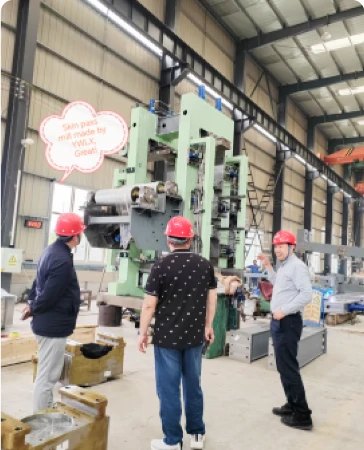
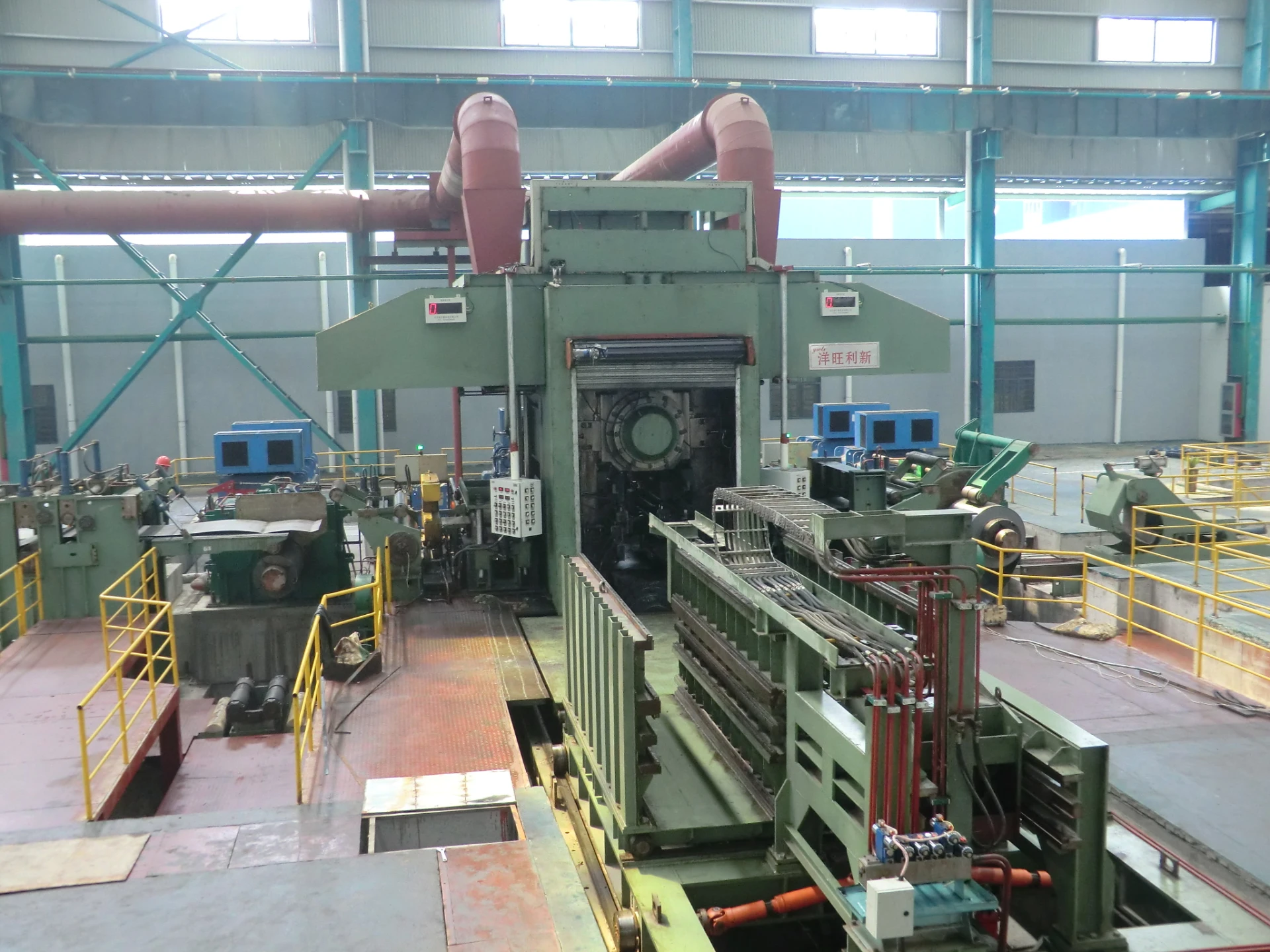

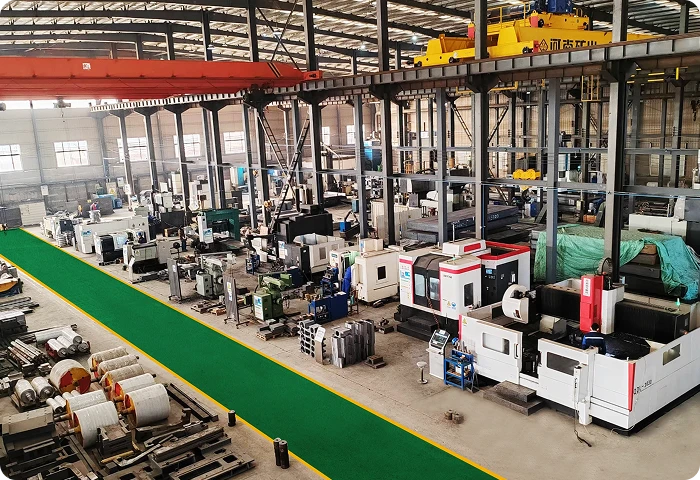
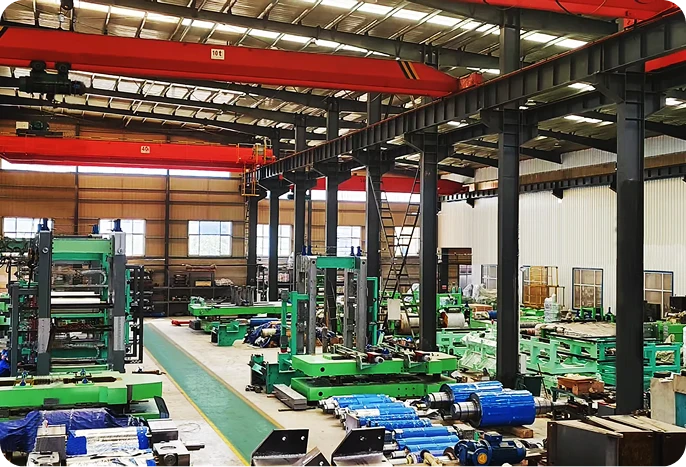
Yang Wang Li Xin operates a state-of-the-art facility over 66,000 square meters,and our manufacturing facility is fully equipped with high-tech machinery and high-capacity cranes. This enables us to handle large work pieces measuring 4.5m in width, 10m in length, and 1.5m in height, guaranteeing our capacity to produce 1800mm skin-pass mills and 1450mm rolling mills. The individual piece can weigh up to 100 tons.


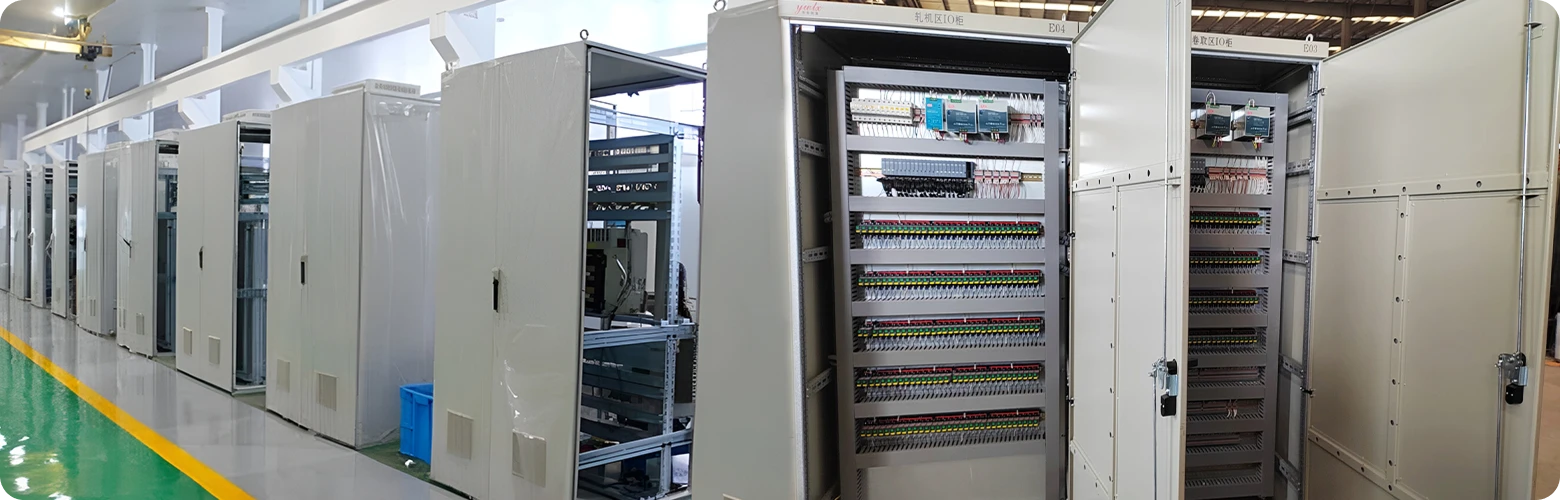
Quality is fundamental to the enterprise survival. We have established a comprehensive and meticulous quality management system and have successfully obtained ISO14000 certification. Starting from the design source, it supervises the entire production cycle, including design, procurement, processing, assembly, in-factory testing, installation, and online commissioning. The workshop is equipped with measuring tools like vernier calipers, spectrometers, hardness testers, and ultrasonic flaw detectors. They are used to check materials and control tolerances to ensure the final equipment meets or exceeds requirements. All products have a unique code, This enables the easy identification and traceability of the equipment components and ensures full control of quality.


-
 processo di laminazione a freddoCold Rolling Process An In-Depth Look Cold rolling is a critical manufacturing process widely utilized in various industries to create materials with specific properties and dimensions. This process involves the deformation of metal at room temperature, which distinguishes it from hot rolling, where the metal is heated above its recrystallization temperature. Cold rolling not only enhances the mec
 -
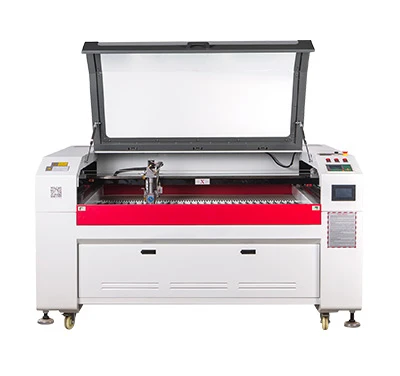 tandem mill rollingIn the world of metalworking and industrial manufacturing, precision and efficiency are critical. One device that plays a crucial role in achieving these objectives is the strip mill, or “مطحنة شرائط” in Arabic—a machine that transforms raw metal into precise strips suited for various applications. This machine is a testament to the sophistication and advancement in metal processing, symbolizing a
 -
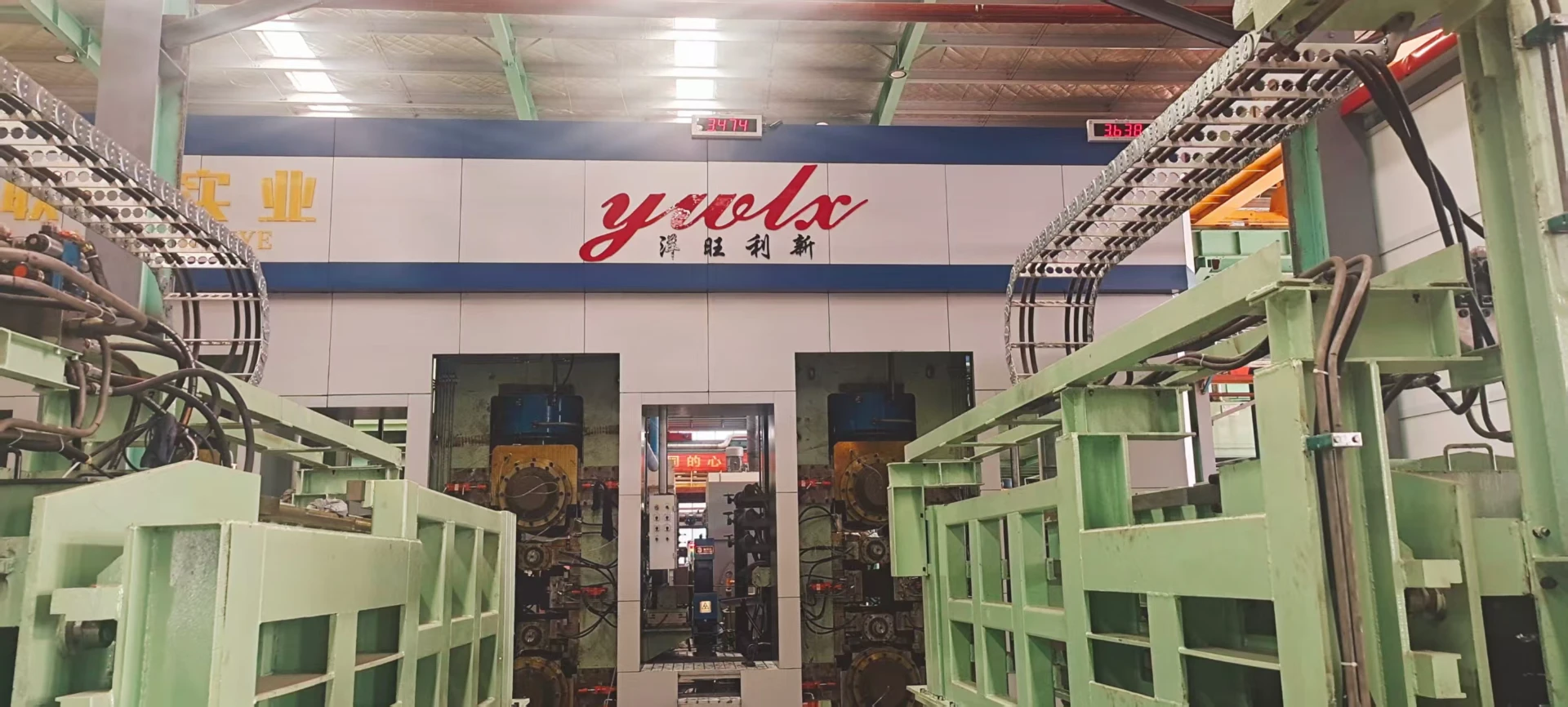 zハイ圧延機In the world of industrial manufacturing, the evolution and optimization of machinery play a crucial role in enhancing productivity and product quality. Among these, the high-precision rolling mill, known as [zハイ圧延機], stands out due to its advanced technology and the significant advantages it offers to various industries. The [zハイ圧延機] is a state-of-the-art piece of equipment that integrates cuttin


